

The builder’s remedy in Menlo Park
What the builder’s remedy is
A penalty in state housing law. When a city’s housing plan lacks state approval, it cannot turn down a qualifying housing development for breaking its zoning or general plan (Housing Accountability Act; a plain‑English guide). A development qualifies if enough of its homes are below market: until 2025, 20% for lower‑income households or all of them for moderate incomes; since AB 1893, 13% lower‑income, 10% very‑low or 7% extremely‑low. It still goes through environmental review.
Menlo Park’s plan lacked state approval from the January 31, 2023 deadline until March 20, 2024, the date in the state’s certification letter (how it got certified). A proposal filed as a preliminary application in that window can claim the remedy: the law holds it to the rules in place that day, as long as the full application follows within 180 days and the developer answers each incomplete notice within 90.
Menlo Park’s two builder’s remedy applications
80 Willow Road — 665 homes, District 3
N17 Development / Willow Park LLC · Preliminary application Dec. 7, 2023; formal application May 24, 2024.
The state has intervened, and the developer said the city had to approve the development by October 27, 2026. On September 29, the City Council said it would not, and on October 1 the city answered the Attorney General. On October 2, the developer sued the city, and on October 19 Palo Alto’s City Council voted to file a brief supporting Menlo Park. The city’s posted schedule has a court hearing on December 14 and a decision in mid to late January 2027; the dates may change. The full story ↓
104 Constitution Drive — 140 homes, District 1
Greystar · Preliminary application before Mar. 20, 2024 (exact date not public); formal application June 4, 2024.
Proposed on the part of the Vasara site approved for an office building that hasn’t been built. The city has deemed the application incomplete three times. In August 2026, Greystar filed a new application for 142 apartments there, as changes to the Vasara approval; the city found it incomplete in September. The full story ↓
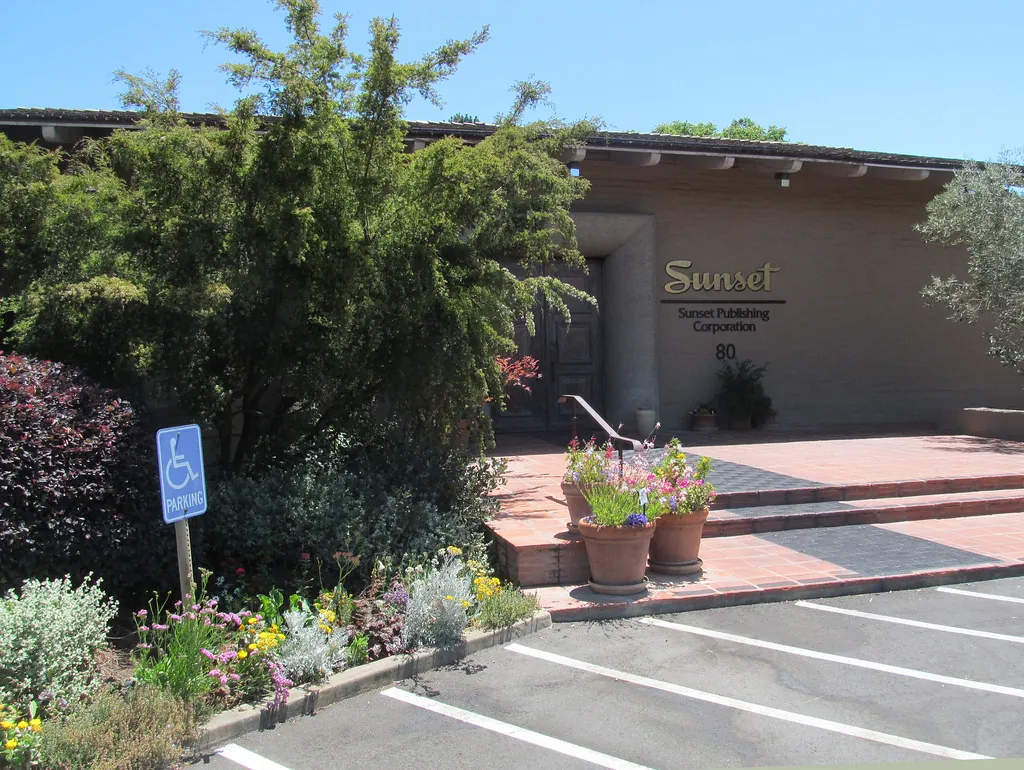
The old Sunset Magazine campus: 80 Willow Road
Updated November 12, 2026. Every entry links to its source.
What’s proposed
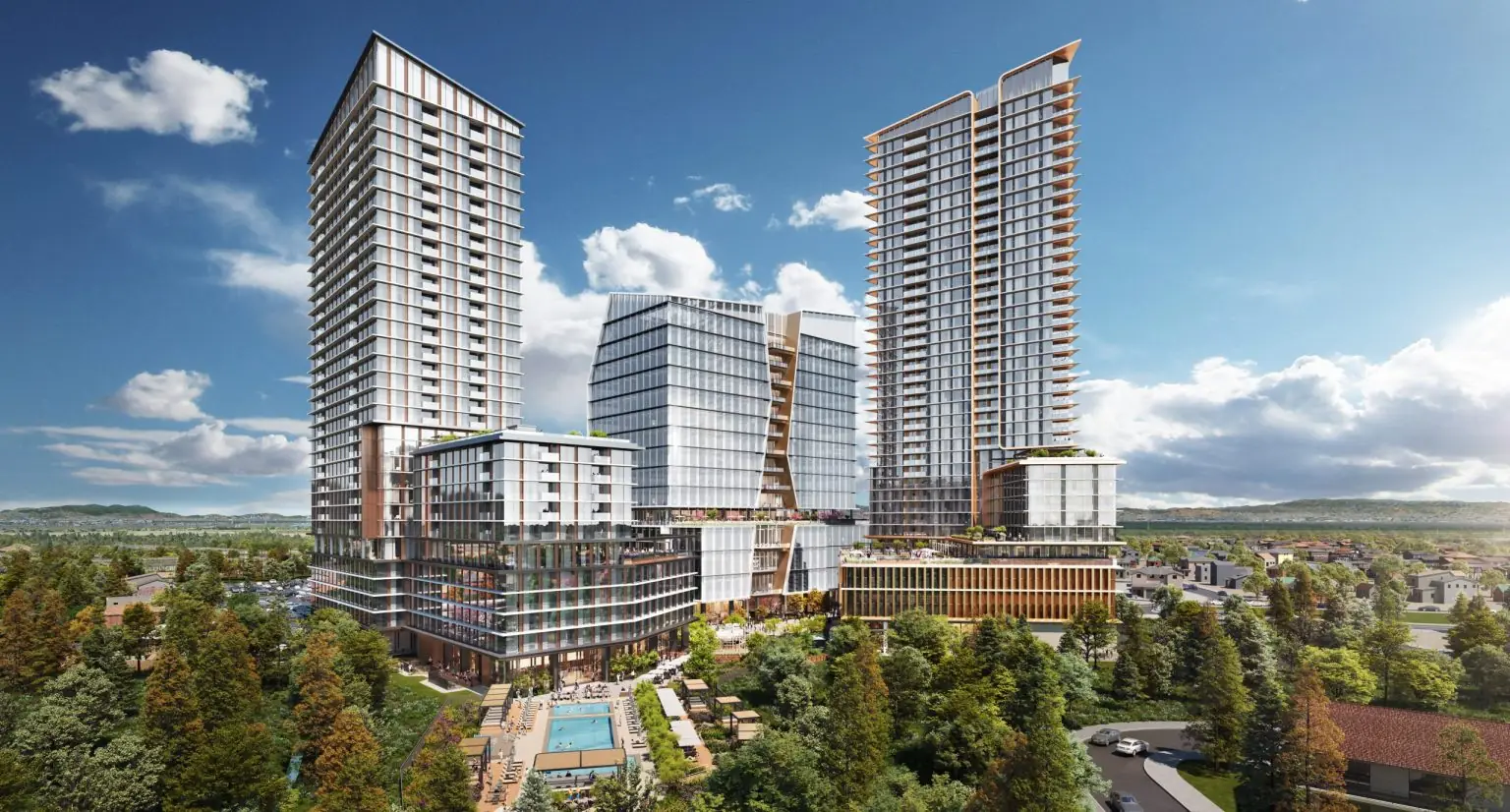
N17 Development, for Willow Park LLC, would replace the campus in Linfield Oaks (District 3) with about 665 homes, 332,000 square feet of offices, a 130‑room hotel, shops and a preschool, in towers of 301 to 458 feet. The Almanac reports the tallest would be the tallest building in California outside San Francisco, Los Angeles and San Diego. The city’s 80 Willow page has the plans and every letter.
39 stories, to scale
- 28 ftA home nearbythe limit on most lots
- 35 ftThe site’s zoningthe limit it was filed under
- 210 ftCoit TowerSan Francisco
- 285 ftHoover TowerStanford
- 458 ft80 Willow Road39 stories
- 853 ftTransamerica PyramidSan Francisco
Heights to scale; shapes simplified.
Heights: the city’s 80 Willow page and The Almanac (39 stories); Menlo Park’s zoning code for the single-family homes around the site, and the city’s Apr. 13, 2026 review for the site itself (its limit when the application was filed); Stanford Magazine; the Skyscraper Center; Wikipedia (Coit Tower).
Why the state is involved
N17 claims the builder’s remedy and a state fast track, AB 2011, that would skip environmental review. With 15% of its homes for lower‑income households, the development is below the 20% the remedy required when N17 filed, but developments the city found complete before 2025, as it found this one in November 2024, may use AB 1893’s lower bar instead. The city says the development doesn’t qualify for the fast track, and on September 29 said it wouldn’t approve it by October 27, the date the developer set. The Attorney General says the city is breaking state housing law in how it has handled the application; the city’s October 1 answer says it has followed the law throughout. On October 2, the developer sued the city.
The state’s notice and the city’s answer, in their own words
On each point the Attorney General raised, an excerpt from each letter, quoted exactly. Both letters are linked in full.
The Attorney General’s notice to the city
Signed by Deputy Attorney General Matthew Struhar for Attorney General Rob Bonta, to the city’s community development director and its city attorney.
The city’s answer to the Attorney General
Signed by City Manager Justin Murphy, to Attorney General Rob Bonta and Deputy Attorney General Matthew Struhar. With four attachments, including a consultant’s study of the development’s finances.
The AB 2011 fast track
“Because the City cannot change its rationale for finding the Project ineligible for streamlined approval from its initial rationale, and because the City’s initial rationale is incorrect, the City’s handling of the application for this Project would represent a violation of the Act [AB 2011].”
“First, the City complied with AB 2011 during all phases of its processing of the Application. … As of the writing of this letter, it is an undisputed fact that the Project continues to conflict with AB 2011’s eligibility criteria.”
The builder’s remedy
“First, the City is failing to afford the Project the protections to which it is entitled under the builder’s remedy.”
“Second, the Project is not entitled to the HAA’s ‘builder’s remedy protections’ because the project is not a ‘housing development project.’ The Applicant failed to submit a development application for a ‘housing development project’ within 180 days of submittal of its preliminary application.”
Charging the developer for the city’s lawyers
“Second, the City is unlawfully requiring the Project applicant to pay for the City’s legal counsel in connection with the City’s review of the Project… the fees incurred appear to do nothing more than to support the subjective judgment of public officials to refuse to process and approve the project under strained interpretations of state law.”
“Third, the HAA does not prohibit the City from passing the cost of Application review to the Project Applicant. … In accordance with AB 712, the City has indisputably not required the Applicant to pay any costs associated with litigation-related expenses or challenges.”
What has happened
- Dec. 7, 2023N17 files its first application, a preliminary one, while Menlo Park’s housing plan still lacks state approval. The state certifies the plan on March 20, 2024. Source
- 2024–2026The city finds the plans inconsistent with its development standards five times, which it notes is not a denial, and rules five times, most recently on May 6, 2026, that the development does not qualify for AB 2011. It says it is still weighing the builder’s remedy claim. Source
See each one: the five reviews and the five fast-track rulings
Five reviews against the city’s development standards
- Jan. 13, 2025Inconsistent in the reviews of seven city departments, including towers of about 301 to 458 feet where the zone allowed 35, about 99 homes an acre where 30 are allowed, a hotel and shops the zone doesn’t allow, and below-market homes smaller than the others, none above the 27th floor. Letter (PDF)
- May 6, 2025After revisions in March, still inconsistent on height, floor area (574% of the lot against 30%), density, setbacks, parking (1,443 spaces against 8,357 required) and the below-market homes, whose share fell from 20% to 16%. The developer asks to waive five standards under state density bonus law. Letter (PDF)
- Nov. 7, 2025After an October revision that splits the site into parcels, still inconsistent on height, floor area, setbacks, parking and the below-market homes (every below-market two-bedroom has one bath), plus new conflicts from the parcels, none of which meets the 2-acre minimum. The city says the developer has yet to list the waivers it wants. Letter (PDF)
- Feb. 12, 2026Still inconsistent on height, floor area, uses, setbacks, parking and the below-market homes. New: under a change to state law on Jan. 1, 2026, the city says the development, with its hotel and about 61% of its space in homes, is not a “housing development project” under the law, and so not a “builder’s remedy project.” Letter (PDF)
- Apr. 13, 2026After a February revision that puts more than two-thirds of the space in homes, still inconsistent on height (301 to 458 feet against 35), floor area, the hotel and shops, parking and where the below-market homes go. The developer has asked to waive six standards, height among them. The city says the part without the hotel can now count as a “housing development project” under the law; the hotel cannot. Letter (PDF)
Five rulings on the AB 2011 fast track
- June 22, 2024Not eligible: less than 75% of the site’s edge borders urban uses (the city says the park next door doesn’t count), the site includes wetlands and protected-species habitat, and it is denser and taller than the fast track allows (about 100 homes an acre against 40; 446 feet against 40). Letter (PDF)
- Nov. 7, 2025Not eligible, on eleven grounds, several of them new: the zone doesn’t allow office, retail or parking as a main use; only 61% of the space is homes, short of two-thirds; the Sunset building is historic; and the below-market homes differ from the others. The Attorney General later said new grounds came too late. Letter (PDF)
- Dec. 18, 2025The same eleven grounds, after the developer objected that the city had raised new ones. The city answers that the rule requiring one complete list of problems wasn’t in effect in June 2024, so it could add them. Letter (PDF)
- Jan. 22, 2026Still not eligible. New: under a state law in effect since Jan. 1, 2026, the hotel must come out of the application and be handled on its own, which would take a rezoning. The city mostly drops its wetlands objection. Letter (PDF)
- May 6, 2026Still not eligible, on the zone, the hotel, the site’s edge, density, parking, street frontage and the below-market homes. The city drops the historic-building objection, since the listing came after the 2023 application, and says the height problem ends if a waiver is granted. Letter (PDF)
- May 13, 2025The council hires a consultant for the environmental review. The work has not started: it is waiting on the developer’s deposit to pay for it. Source
- June 24, 2025The Sunset campus is found eligible for the National Register of Historic Places, which puts it on the California Register of Historical Resources. Source
- July 29, 2026Attorney General Rob Bonta writes that the city’s handling violates AB 2011, the Housing Accountability Act and AB 712: it changed its reasons for refusing the fast track after giving its first ones, withheld builder’s remedy protections, and has billed the developer for the city’s own legal costs (about $300,000, by the developer’s count). The letter does not order the city to approve the development. Read the letter (PDF)
- Aug. 3, 2026The developer’s lawyers give notice that they intend to sue, and say the city must approve the development by October 27, 90 days after the Attorney General’s letter. Source
- Aug. 25, 2026Mayor Betsy Nash replies to the Attorney General. She blames the housing plan’s delay on turnover among the state’s reviewers and invites him to visit the site. Read the letter
- Sept. 23, 2026Rep. Sam Liccardo asks the U.S. Treasury to review the development’s financing and to consider sanctions against the Russian businessman reported to own the site. He is not under U.S. sanctions. Sanctioned people cannot own property in the U.S., so sanctions could stop the development. Source
- Sept. 24, 2026The city asks the state Department of Justice, which the Attorney General leads, for its records that mention any of 25 people and companies tied to 80 Willow, under the state’s public records law. On Oct. 21 the department declines to search for every such record, but says it has begun a reasonable search and expects to answer by Nov. 6. On Oct. 26 City Attorney Nira Doherty asks for a full and prompt search, saying the city is gathering records for the developer’s suit, in which the Attorney General’s office plays a central role. Source
- Sept. 29, 2026After a closed session, the City Council says it respectfully disagrees with the Attorney General’s analysis, and that state law does not require it to approve the development on the terms of the notice. It acknowledges that the threatened penalties could have severe consequences for the city. Mayor Nash says the development would strain infrastructure and emergency response and worsen the imbalance between jobs and homes. The city will keep processing the application, with environmental review unless the development is shown to be exempt. Read the council’s statement
- Sept. 30, 2026Council Member Drew Combs writes in his newsletter that a potential buyer with a serious interest in the property approached him several weeks earlier, and that he and Mayor Nash have been talking with them about the city permits their plans would need. He says the buyer values the campus’s history and could use it with only minimal interior changes, and that a sale is not guaranteed. Source
- Oct. 1, 2026The city answers the Attorney General in a letter from City Manager Justin Murphy. It says it followed state law throughout: the development still fails AB 2011’s eligibility rules; it is not a “builder’s remedy project,” because no application for a “housing development project” followed within 180 days of the preliminary application; and the city may charge the applicant for reviewing the application, though not for litigation. It says the Attorney General’s office met city staff once, for an hour, the day before the notice, and it asks to meet again. Attached: Rep. Liccardo’s letter, the mayor’s Aug. 25 letter, a consultant’s memo finding the development financially infeasible, and the city’s housing approvals over ten years. Read the city’s letter
- Oct. 2, 2026The developer sues the city in San Mateo County Superior Court. Its petition asks the court to order the city to approve the development, treating it as eligible for AB 2011’s fast track and granting the exceptions it seeks under the state’s density-bonus law, including on height. It also asks the court to stop the city from charging it for the city’s legal costs and to refund what it has paid (about $300,000, by its count), and to award damages and fines, including AB 712’s fine of at least $10,000 per home. It argues that the city’s May 6 letter and the council’s Sept. 29 statement amount to disapproving the development, and that the city acted in bad faith. The city’s spokesperson says the suit “is based on inaccurate assumptions,” points to the city’s Oct. 1 letter for why the development does not qualify for faster approval, and says the city “is committed to building housing.” Read the petition (PDF)
- Oct. 13, 2026The City Council unanimously approves hiring an outside law firm, Goldfarb & Lipman, to help the City Attorney’s office defend the city in the developer’s suit. The firm bills by the hour. Source
- Oct. 19, 2026Palo Alto’s City Council, meeting in closed session, votes 7–0 to have its City Attorney’s office file a friend-of-the-court (amicus) brief supporting Menlo Park in the developer’s suit. Read Palo Alto’s minutes (PDF)
- Oct. 27, 2026The date the developer said the city had to approve by. It passed with the application still under review: the city says it continues to process it. Source
- Oct. 29, 2026Mayor Nash writes to the Attorney General a third time; her second letter, on Oct. 16, had also invited him to visit the site. She says the city has heard nothing from his office since the July 29 notice except its reply to the city’s records request, that the city believes it has followed state law, and that Menlo Park has approved 5,004 new homes in multi-unit buildings in the past ten years. She invites him again to see the site. Read the letter (PDF)
- Nov. 18, 2026Coming upThe developer’s opening brief, its main written argument, is due. This and the dates below are the city’s posted schedule, on the faster timetable state law now sets for housing cases. They may change. Source
- Dec. 1, 2026Coming upThe city’s response is due. Source
- Dec. 8, 2026Coming upThe developer’s reply is due. Source
- Dec. 14, 2026Coming upThe court hears the developer’s suit. Source
- Mid to late Jan. 2027Coming upThe court’s decision is expected. Source
In court
The developer sued on October 2 (its petition). The case is Willow Project LLC v. City of Menlo Park, No. 26‑CIV‑07675. The city was formally handed the lawsuit on October 5 and has hired an outside law firm to help defend it (staff report). On October 19, Palo Alto’s City Council voted to file a friend‑of‑the‑court brief supporting Menlo Park (its minutes). State law now moves housing cases like this one faster. The city’s page now gives this schedule: the developer’s opening brief by November 18, the city’s response by December 1, the developer’s reply by December 8, a hearing on December 14, and a decision in mid to late January 2027. That moves the hearing from November and the decision from December, and the dates may still change (the city’s page).
If the developer wins on the grounds the Attorney General named, AB 712 requires a fine of at least $10,000 per home, the Housing Accountability Act’s minimum: $6.65 million or more at 665 homes, plus the developer’s legal fees. The petition also says the city acted in bad faith. If a court agreed and the city then did not carry out the court’s order, the Housing Accountability Act would multiply its fine by five. The same law bars a city from making an applicant pay the city’s own legal costs, which the Attorney General says Menlo Park is doing.
Next to Vasara: 104 Constitution Drive
Updated November 12, 2026. Every entry links to its source.
What’s proposed
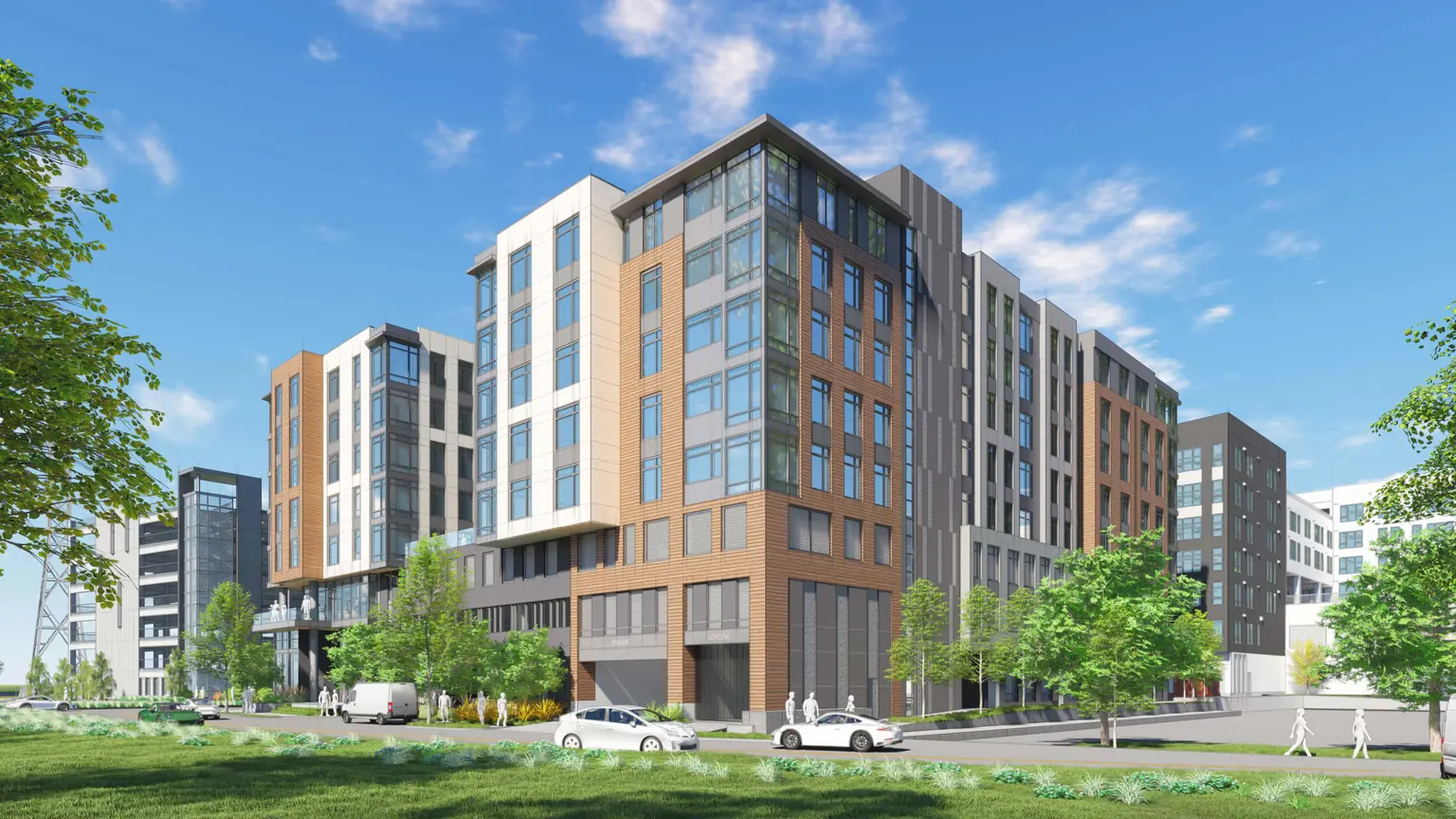
Greystar would build 140 homes in District 1, in a building about 83 feet tall (92 feet to the top of its stair and elevator towers), at 160 homes per acre. The 0.87‑acre lot sits between Highway 101 and the Bayfront Expressway, on Greystar’s own Vasara site: the city approved it in 2021 for a 34,499‑square‑foot office and commercial building that hasn’t been started, next to Vasara’s finished 335‑apartment building. The city’s page said it would verify these figures once the application was complete, and the city has not published how many homes would be affordable.
Where it stands
The city found the builder’s remedy application incomplete three times, most recently on October 16, 2024, and its page listed no new filing on it after that. State law gives a developer 90 days to supply what an incomplete notice asks for; if it doesn’t, the preliminary application expires, and with it the claim to the rules in place before certification. The city hasn’t said publicly whether that has happened here; its builder’s remedy page still lists 104 Constitution. On August 28, 2026, Greystar filed a new application for the same lot: an eight‑story building with 142 apartments, as changes to the permits the city approved for Vasara in 2021. The city found it incomplete on September 25, 2026, and its page for 104 Constitution now describes only this new application. The city’s July 2026 housing update still counts the builder’s remedy application as pending: 140 homes, 28 of them (20%) for low-income households.
What has happened
- Before Mar. 20, 2024Greystar files a preliminary application claiming the builder’s remedy, before the state certifies Menlo Park’s housing plan. The exact date has not been made public. Source
- June 4, 2024Greystar files the formal application. Source
- July 3, 2024The city finds it incomplete: several required items are missing. Source
- July 16, 2024Greystar resubmits. Source
- Aug. 15, 2024Incomplete again, for several missing items. Source
- Sept. 16, 2024Greystar resubmits again. Source
- Oct. 16, 2024Incomplete a third time, for one missing item. The city’s page said Greystar could resubmit or appeal, and listed nothing more on this application. Source
- Aug. 28, 2026Greystar files a new application for the lot: an eight-story building with 142 apartments in place of the office building, asking the city to change the permits and the below-market housing agreement it approved for Vasara in 2021. The city’s page now describes only this application. Source
- Sept. 25, 2026The city finds the new application incomplete: required items are missing. Greystar can respond. Source
Sources (29)
- City of Menlo Park, Builder’s Remedy page, which lists both applications
- City of Menlo Park, 80 Willow Road page, with the plans, every ruling and letter, and the council’s Sept. 29 statement
- City of Menlo Park, 104 Constitution Drive page, with the new application of Aug. 28, 2026
- City of Menlo Park, 104 Constitution Drive page as it read on Jan. 19, 2026, with the builder’s remedy application (Internet Archive copy)
- The Attorney General’s letter to the city, July 29, 2026 (PDF)
- The developer’s notice to the city, Aug. 3, 2026 (PDF)
- Mayor Betsy Nash’s letter to the Attorney General, Aug. 25, 2026, as printed in The Almanac
- Palo Alto Daily Post, Sept. 29, 2026: the council’s decision
- Council Member Drew Combs, October 2026 newsletter (Sept. 30)
- The city’s response to the Attorney General, Oct. 1, 2026 (PDF)
- The developer’s petition, San Mateo County Superior Court, Oct. 2, 2026 (PDF, the city’s copy)
- The Almanac, Oct. 2, 2026: the lawsuit and the city’s statement
- City of Menlo Park, staff report for the council’s Oct. 13, 2026 meeting: an outside law firm for the suit (PDF)
- The Almanac, Oct. 19, 2026: the council hires an outside law firm
- City of Palo Alto, City Council summary minutes, Oct. 19, 2026: the vote to file a brief supporting Menlo Park (PDF)
- Mayor Betsy Nash’s second letter to the Attorney General, Oct. 16, 2026, The Almanac’s copy (PDF)
- The Almanac, Oct. 21, 2026: the mayor’s second letter, and Palo Alto’s vote
- Mayor Betsy Nash’s third letter to the Attorney General, Oct. 29, 2026, The Almanac’s copy (PDF)
- The Almanac, Nov. 3, 2026: the mayor’s third letter, and the city’s records request to the state
- Government Code 65914.2 (AB 712)
- Government Code 65589.5, the Housing Accountability Act
- Government Code 65941.1, on preliminary applications
- The state’s certification of Menlo Park’s housing plan, March 20, 2024 (PDF)
- Holland & Knight, a guide to the builder’s remedy, Oct. 2022
- The Almanac, Sept. 14, 2026: the mayor invites Bonta to see the site
- The Almanac, Sept. 18, 2026: questions about who owns the site
- The Almanac, Sept. 24, 2026: Rep. Liccardo asks for a federal review
- The Almanac, July 9, 2024: the second application found incomplete
- The Almanac, Oct. 22, 2024: both applications found incomplete again
The chart, the two letters and every entry in the timelines also link their own sources.